Foton Motor Lifts Operating Quality in First Three Quarters as Overseas and New Energy Drive High-Quality Transition

On October 30, Foton Motor released its third-quarter 2026 report. Facing cyclical adjustment in the commercial vehicle industry and intensifying market competition, Foton relied on its global footprint, new energy transition and continuous optimization of product mix to deliver simultaneous improvement in revenue, profitability and vehicle sales across the first three quarters. Operating quality steadily improved, growth momentum in the overseas and new energy businesses continued to be released, and the foundation for high-quality development was further consolidated.
In the first three quarters, Foton Motor recorded cumulative revenue of RMB 48.93 billion, up 7.66% year on year; net profit attributable to shareholders of the listed company reached RMB 1.15 billion, up 3.07% year on year; and net profit attributable to shareholders after deducting non-recurring items came in at RMB 990 million, up 30.13% year on year. Against a backdrop of a volatile industry and persistent pressure from raw material costs and price competition, the company maintained stable revenue scale, restored its profitability level, and continued to optimize its earnings indicators.
Earlier, on October 23, Foton Motor published an announcement on the progress of a shareholding increase by its controlling shareholder. BAIC Group had accumulated an additional 17.7703 million A shares, representing 0.22% of total share capital, with a cumulative purchase value of RMB 50.2997 million. As controlling shareholder, BAIC Group's commitment of real capital is a strong endorsement of Foton's strategic path, its operational improvement and its long-term investment value, and it sends a clear signal of confidence in the company's medium- to long-term development to the capital markets.
Sales provided parallel support: cumulative vehicle sales in the first three quarters exceeded 517,000 units, up 7.9% year on year. By category, heavy trucks, light trucks, buses and special-purpose vehicles all contributed; overseas exports kept drawing a new growth curve; new energy sales accelerated; and the product mix continued to shift toward higher value-added, higher technology-content models, laying a solid base for improved profitability.
Revenue and profit recover in tandem; sales structure supports improving operations
The steady performance of core businesses is the central support behind the improvement in Foton's operating indicators. Rather than pursuing scale expansion alone, the company has adhered to a profitability-first orientation, directing resources toward high-margin segments and high-value orders, which continues to optimize the revenue structure.
On the profitability side, thanks to coordinated supply chain optimization, lean production control and a rising share of high value-added models, the company's total profit in the first three quarters reached RMB 1.148 billion, up 9.14% year on year, while cost control results became evident and earnings resilience strengthened. The commercial vehicle industry is markedly cyclical, and amid intensifying competition for the domestic internal-combustion installed base, Foton did not rely on low prices to buy volume; instead it won quality orders through vehicle lifecycle TCO advantages, customized solutions and localized service capability, driving parallel recovery in revenue and profit.
Business lines worked in coordination across the first three quarters: ramping overseas orders, scaling new energy models and releasing demand for special-purpose vehicle chassis together formed the sources of incremental revenue. In particular, the overseas business's contribution to revenue kept rising, while new energy revenue growth clearly outpaced the traditional internal-combustion business, becoming a new variable driving overall revenue growth. Domestically, demand in urban distribution, cold chain, sanitation and trunk logistics diverged; Foton matched scenario needs precisely, continuously iterating its heavy truck, light truck, VAN and special-purpose chassis matrix to keep the base stable. A series of benchmark bulk orders further consolidated the revenue foundation.

Continued overseas breakthroughs as globalization strategy delivers results
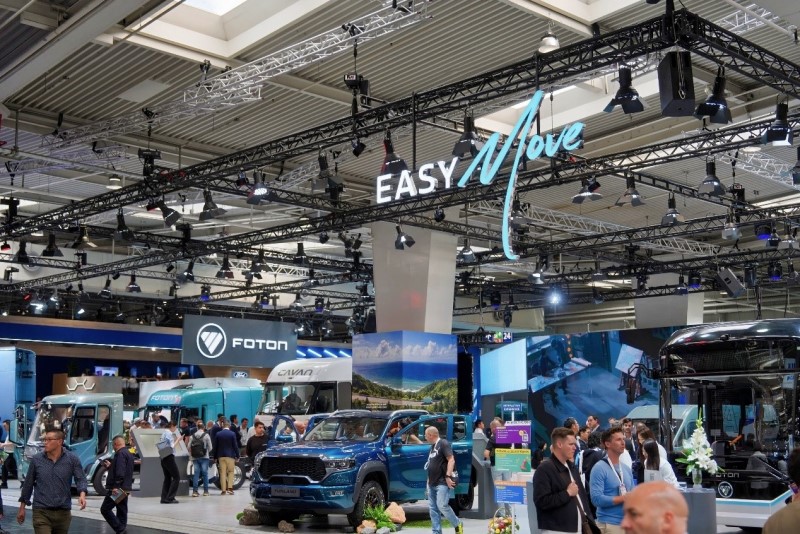
The overseas business is currently one of Foton's most important growth engines and a key contributor to incremental revenue. Building on years of overseas channels, localized capacity and service infrastructure, Foton continues to push all-category commercial vehicles abroad, deepening penetration in core markets such as Africa and Latin America while accelerating access to and positioning in premium markets such as Europe. In the first three quarters, cumulative overseas exports reached nearly 169,000 units, up 43.6% year on year; new energy exports rose more than 131% year on year; exports to Africa grew over 86%, to Europe over 48%, and to the Americas over 41%. In terms of product mix, new energy light trucks, battery-electric coaches, high-horsepower heavy trucks and special-purpose work vehicles gained wider recognition overseas, the share of high-value products rose steadily, and revenue per exported unit continued to improve.
Rather than simple finished-vehicle exports, Foton has kept advancing localized KD assembly, localized supply chain support and localized marketing and service systems, building an integrated "product plus technology plus service" model for going global. Guided by its "3040" overseas strategy, the company continues to refine its global dealer network, parts central warehouses and localized service stations, shortening delivery times and improving after-sales response, steadily consolidating its reputation among overseas users and progressively upgrading from product exports to brand globalization. A series of landmark overseas orders, appearances at global and regional motor shows, and localized strategic partnerships became key milestones of Foton's globalization in the first three quarters.
New energy transition deepens; multi-scenario deployment accelerates
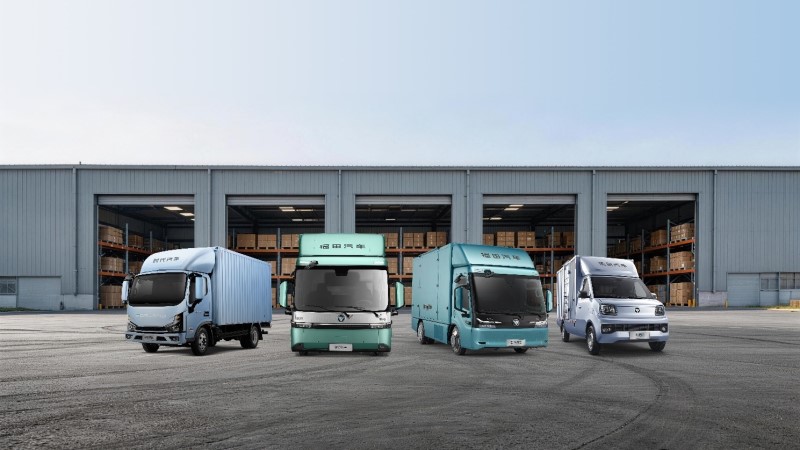
As one of the earliest movers in China's new energy commercial vehicle space, Foton has continued to develop multiple technology routes - battery electric, hybrid and hydrogen fuel cell - covering urban distribution light trucks, light vans, sanitation special-purpose vehicles, public transit coaches and hydrogen heavy trucks, closely aligned with policy directions and customer needs in urban green freight, public transport and zero-carbon industrial parks. The contribution of the new energy business keeps expanding. In the first three quarters, cumulative new energy commercial vehicle sales exceeded 95,000 units, up 28% year on year. The Foton Fengjing, Xiangling and Cavon series of new energy urban distribution models continued to consolidate the city delivery base; the Toano battery-electric light van gained volume in passenger, conversion and camping applications; hydrogen fuel cell heavy trucks and sanitation vehicles achieved routine operation in several domestic zero-carbon demonstration zones, while advanced models such as the Cavon Xinghai liquid-hydrogen heavy truck continued demonstration operations and scenario validation, steadily opening the path to commercialization of hydrogen commercial vehicles.
On the technology platform side, Foton keeps iterating around its proprietary AiYiKe "three-electric" systems and the Cangqiong intelligent driving ABC product architecture, focusing on technologies adapted to commercial vehicle duty cycles and rolling out intelligent connected demonstration projects for trunk logistics, park transfer and urban sanitation. Unlike passenger car intelligence, Foton's commercial vehicle smart technology prioritizes cost reduction and efficiency gains, safe operations and fleet management value, helping logistics, sanitation and public transit customers raise operating efficiency and moving new energy models from policy-driven to market-driven demand. As green freight policies land across regions and charging and battery-swap infrastructure improves, the market space for new energy commercial vehicles widens further; Foton has already formed a multi-platform, multi-scenario, multi-powertrain new energy product matrix to support medium- to long-term revenue growth.
Domestic core business solid; optimized product mix lifts quality and efficiency
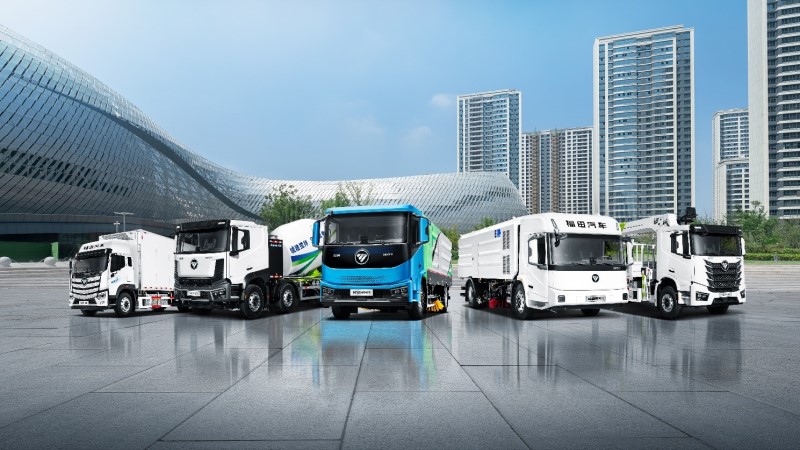
The domestic commercial vehicle market shows strongly structural characteristics, with clearly differentiated demand in urban distribution logistics, engineering special-purpose applications, cold chain transport and passenger segments. Foton has kept customer scenarios at the core, continuously optimizing its heavy truck, light truck, VAN and special-purpose vehicle matrix, phasing out inefficient products and tilting toward high value-added niches. In the first three quarters, domestic sales reached nearly 350,000 units. The light truck segment consolidated the base, with compliant urban distribution models such as cold chain, curtain-side and box body trucks holding stable demand; heavy trucks focused on trunk logistics, engineering and hazardous materials segments, continuously launching new high-horsepower, low fuel consumption, high reliability models and achieving rapid growth; special-purpose vehicles leveraged mature chassis strengths to maintain stable advantages in sanitation, cold chain, power and municipal equipment; and the Toano and Fengjing light van series covered passenger, freight and conversion markets, serving B-end fleets and diverse conversion needs.
In its management approach, Foton continues to shift from "scale first" to "efficiency first," strictly controlling low-margin, low-efficiency orders, stepping up promotion of high-value models, optimizing supply chain coordination and production scheduling, and continuously reducing operating costs. Facing industry price competition, the company wins customers through vehicle lifecycle TCO advantages, service network strengths and customized solution capability rather than simple price wars, steadily improving profitability. Its nationwide service network and parts support system are also core pillars for serving customers and keeping fleets operating efficiently.
Looking to the medium and long term, Foton has anchored the main line of its 15th Five-Year Plan development roadmap and remains resolute in advancing its three core strategies - comprehensive internationalization, comprehensive new energy transition and comprehensive intelligentization. Over the plan period, the company will keep increasing investment in core technology research and development, strengthening capabilities in three-electric systems, hydrogen, intelligent driving and commercial-vehicle-specific chassis; continue optimizing its global industrial footprint and enhancing its ability to develop premium markets; and expand new business ecosystems such as zero-carbon logistics, smart fleets and vehicle-road coordination, moving beyond the boundary of pure vehicle manufacturing toward a smart, green logistics solution provider.
From an industry cycle perspective, commercial vehicles sit at a critical window of green transition and global industrial restructuring. In the short term, the pace of domestic demand recovery, infrastructure investment, logistics activity, and overseas geopolitical and trade policies remain uncertain; in the long term, new energy substitution, global market expansion and intelligent upgrading of commercial vehicles are clear main lines. Backed by solid industrial accumulation, a complete product matrix and continuously delivered benchmark projects, Foton will keep seizing structural opportunities in the industry, pursue growth with quality, and steadily advance from a leading domestic commercial vehicle enterprise toward a world-class global commercial vehicle brand.