
On November 7, the 2026 Beijing-Tianjin-Hebei Hydrogen Energy High-Quality Development Special Session, themed "Hydrogen Chain, Green Future", was held at the Petroleum Science and Technology Exchange Centre in Changping, Beijing. As one of the core sub-forums of the 2026 Energy Transition Conference, the event was supported by the Beijing Municipal Bureau of Economy and Information Technology and the Changping District People's Government, hosted by BAIC Foton, and co-organised by the Zhongguancun Hydrogen Energy and Fuel Cell Technology Innovation Industry Alliance.
The session was timed to a critical juncture: the national Beijing-Tianjin-Hebei hydrogen comprehensive application pilot programme has been fully launched, and Beijing's new mid- and long-term plan for the hydrogen industry has entered the implementation phase. Representatives from government departments, research institutes, industry bodies and upstream and downstream enterprises gathered to hold in-depth discussions on policy direction, technological progress, standards systems and application scenarios, pooling ideas and momentum for the high-quality development of the capital's hydrogen industry.

The 2026 Energy Transition Conference · Beijing-Tianjin-Hebei Hydrogen Energy High-Quality Development Special Session
Multi-Party Consensus Charting the Industry's Direction
At the forum, Lu Zhenghua, Secretary of the Party Committee and General Manager of BAIC Foton, said in his address that hydrogen is moving from a stage of technology accumulation into one of large-scale application. The national "15th Five-Year Plan" has made forward-looking arrangements for future industries, and five national hydrogen comprehensive application pilot city clusters have been successively approved, injecting strong policy momentum into industrial development.
As one of the earliest domestic commercial vehicle makers to position itself in hydrogen energy, Foton began its R&D work in 2006. After nearly two decades of technological accumulation, it has promoted more than 3,600 fuel-cell vehicles, logged over 220 million kilometres of safe operation, and covered diverse scenarios including urban distribution, regional logistics and trunk-line transportation. The company adheres to a three-track technology route of "pure electric, hybrid and fuel cell", and has built a self-reliant full-chain layout spanning "complete vehicles + fuel-cell systems + core components". Looking ahead, Foton will seize the opportunity offered by the Beijing-Tianjin-Hebei pilot, working with supply-chain partners to tackle core bottlenecks in efficiency, cost and service life, and to move hydrogen commercial vehicles from demonstration towards large-scale commercial operation.
Su Guobin, Deputy Director of the Beijing Municipal Bureau of Economy and Information Technology, noted in his address that hydrogen is one of the six future industries identified in the national "15th Five-Year Plan" and is accelerating towards commercial use at scale. On 30 October, Beijing released a new hydrogen implementation plan, shifting the industry from "policy transfusion" to "market-generated blood". The earlier Beijing-Tianjin-Hebei fuel-cell demonstration has produced outstanding results; heading into the 15th Five-Year Plan period, Beijing will rely on the pilot city clusters to lay out hydrogen road networks, expand application scenarios and build a model for the entire Beijing-Tianjin-Hebei hydrogen value chain. He commended Foton's contribution as a pioneer and chain-leader enterprise in the region's hydrogen industry and called on all parties to jointly improve the capital's hydrogen supply-chain ecosystem.

Su Guobin, Deputy Director of the Beijing Municipal Bureau of Economy and Information Technology, delivers an address
Liu Weihua, a member of the Standing Committee of the Changping District Party Committee, member of the District Party Group and Deputy District Mayor, said that Changping, as a core carrier of the capital's hydrogen industry and a hub of Beijing-Tianjin-Hebei collaborative innovation, relies on the science-and-technology strengths of the "Energy Valley" in the Future Science City. The district has brought together industry, academia and research entities; four achievements — including one by BAIC Foton — have been selected for national-level demonstration, forming a complete ecosystem of "innovation source plus industrial clustering". Changping is now focusing on three tracks — fuel-cell complete vehicles and core components, new electrolytic hydrogen production equipment, and green fuels using hydrogen for energy — to build a hydrogen innovation and integration demonstration zone. It will continue to refine policy, open up scenarios and improve the business environment, actively joining the broader Beijing-Tianjin-Hebei hydrogen agenda and jointly building the "Energy Valley" as a flagship of the carbon-neutrality strategy.
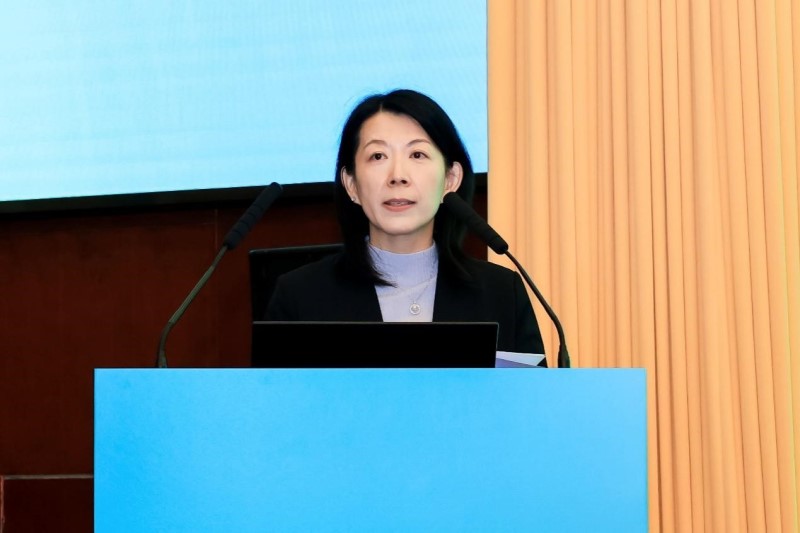
Liu Weihua, Deputy District Mayor of Changping, delivers an address
In-Depth Discussion: Frontier Insights Across the Full Value Chain
The special session was organised around two core segments — keynote presentations and a round-table forum — creating a professional platform for deep exchange between government, industry, academia, research and end users, and responding comprehensively to the industry's central concerns.
During the keynote segment, seven experts from authoritative institutions, leading universities and major enterprises took the stage in turn, presenting in-depth insights on seven themes: policy interpretation, industry trends, technological breakthroughs, standards and norms, storage and transportation practice, clean hydrogen technology, and vehicle application, giving attendees a view of frontier developments and practical pathways across the entire hydrogen value chain.
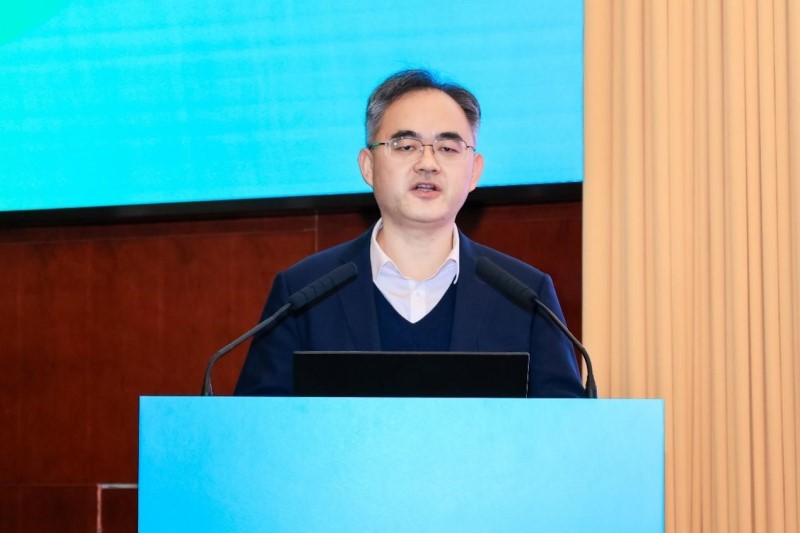
Fang Haifeng, Chief Expert at China Automotive Technology and Research Center, presents "Interpretation of and Recommendations for the Hydrogen Comprehensive Application Pilot"

Lu Chenyu, Secretary-General of the Zhongguancun Hydrogen Energy and Fuel Cell Technology Innovation Industry Alliance, presents "Current Status and Development Trends of the Hydrogen and Fuel-Cell Industry"

Professor Li Jianqiu of Tsinghua University's School of Vehicle and Mobility presents "The Development of Hydrogen and Fuel-Cell Technology"

Senior Engineer Su Zhiyang of the China Automotive Standards Research Institute presents "International and Domestic Standards for Fuel-Cell Electric Vehicles: Current Status and Future Planning"

Senior Engineer Huang Jianqin of Beijing Gas Group presents "Beijing Gas's Exploration and Practice in Regional Hydrogen Supply"

Director Chen Ying of SPIC Hydrogen Technology presents "SPIC Hydrogen Technology's Practice in Hydrogen Energy"
Also presenting at the session, Liu Yongliang, Foton's Fuel Cell Technology Director, pointed out that BAIC Foton has consistently treated hydrogen as a key technology route within its new-energy strategy. Since starting fuel-cell technology and product R&D in 2006, the company has created multiple industry firsts and built a supply-chain system covering the entire hydrogen value chain. During the 15th Five-Year Plan period, Foton plans a nationwide promotion volume of 7,000 hydrogen commercial vehicles. He also shared the company's R&D practice on liquid-hydrogen heavy trucks: the latest-generation product carries a 300 kW fuel-cell engine, breaks through 1,000 kilometres of range under combined operating conditions, cuts hydrogen consumption to under 7 kg per 100 kilometres, achieves a drag coefficient as low as 0.28, and reduces vehicle weight by 30%. Foton has so far led the drafting of nine liquid-hydrogen commercial vehicle standards and is exploring demonstration operations around Xuyang Hydrogen's neighbouring scenarios and the expressway routes used for Shougang steel transportation.

Liu Yongliang, Fuel Cell Technology Director at BAIC Foton, presents "Technical Progress and Industry Prospects for Liquid-Hydrogen Heavy Trucks"
Following the keynote segment, Qin Zhidong, Deputy General Manager of BAIC Foton, moderated a round-table forum themed "Hydrogen Chain, Future — Collaborative Innovation Across the Hydrogen Industry Chain". Four guests from industry bodies, research institutes and universities held a dialogue across four dimensions: scenario-driven positioning and deployment; technological breakthroughs and a self-reliant, stronger chain; storage and transportation as foundation with standards as reinforcement; and the electricity-hydrogen convergence that extends the chain. They exchanged practical experience and explored solutions to shared questions of economics, safety and coordination in the industry's scale-up process.
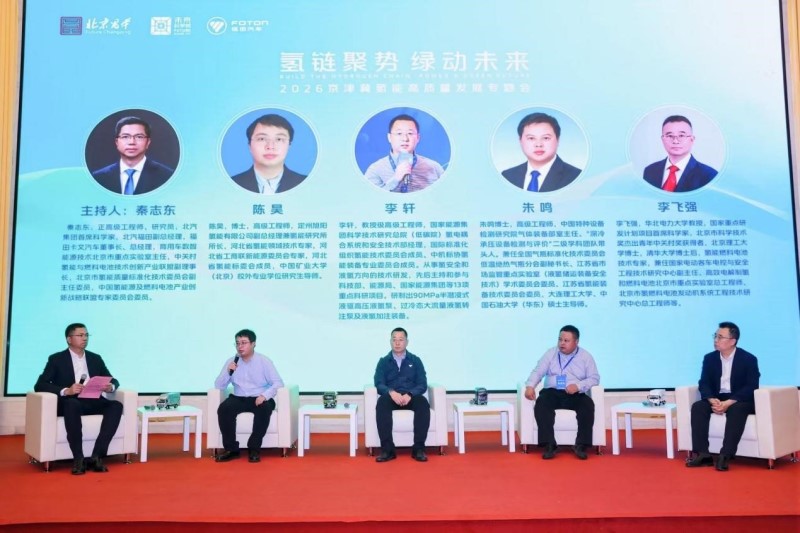
Qin Zhidong, Deputy General Manager of BAIC Foton, moderates the round-table forum
Chaining Synergy, Concentrating Force: Full-Chain Layout Accelerates Industrial Advancement
Hydrogen is a core pillar for building a new energy system and delivering on the carbon-peaking and carbon-neutrality strategy, and hydrogen heavy trucks are a critical pathway to zero-carbon transition in medium- and heavy-duty long-haul freight. As the domestic commercial vehicle maker that entered hydrogen earliest, BAIC Foton has been working the hydrogen track since 2006. After nearly two decades of accumulation it has grown into a leading domestic hydrogen fuel-cell commercial vehicle enterprise and the core chain-leader unit of Beijing's hydrogen industry chain.
The Cavan Xinghai liquid-hydrogen heavy truck displayed at the venue is a landmark result of Foton's industrialisation of liquid-hydrogen technology. Developed on a forward, platform-based architecture, it covers multiple energy forms — pure electric, gaseous hydrogen and liquid hydrogen — and carries a 300 kW hydrogen fuel-cell system together with an 80 kg high-capacity hydrogen storage system, delivering a range of more than 1,000 kilometres under real operating conditions and matching long-haul expressway logistics scenarios precisely.

The BAIC Foton Cavan Xinghai liquid-hydrogen heavy truck
BAIC Foton maintains its "pure electric + hybrid + fuel cell" three-track technology route and has built a self-reliant full-chain layout of "complete vehicles + fuel-cell systems + core components" in hydrogen. On the vehicle side, it has made breakthroughs in key technologies including liquid-hydrogen vehicle application, high-power fuel-cell matching, high-efficiency electric drive control, and comprehensive use of cooling and thermal energy. On the system and component side, it is working on high-power fuel-cell integration, thermal management, and high-safety, high-density gaseous and liquid hydrogen storage and supply, while continuing to advance domestic substitution of core parts such as stacks, membrane electrodes, bipolar plates and catalysts.
Drawing on this deep technical accumulation, BAIC Foton is coordinating with ecosystem partners along the chain to improve the full system of hydrogen production, storage, transportation, refuelling and use. Its hydrogen products now cover major-event support, urban distribution, regional logistics, trunk-line transport and public bus and passenger services, placing the company firmly in the industry's first tier. From the 2008 Beijing Olympics to the 2022 Beijing Winter Olympics, Foton's hydrogen vehicles have continuously served major international events, powerfully advancing hydrogen commercial vehicles from demonstration operation towards large-scale commercial application.
Today, with the national Beijing-Tianjin-Hebei hydrogen comprehensive application pilot fully launched and Beijing's 2026–2030 hydrogen industry implementation plan officially in place, the sector has entered a window period for scaling up. BAIC Foton is seizing this dual policy-and-market opportunity, taking frontier products such as the liquid-hydrogen heavy truck as its core lever, integrating deeply into the "6 main corridors plus 11 branch lines" hydrogen expressway network layout, deepening upstream and downstream collaborative innovation, jointly tackling common bottlenecks in efficiency, cost and service life, and expanding core application scenarios such as trunk-line heavy trucks and green logistics — contributing Foton's strength to China's green and low-carbon energy transition.