Hydrogen Chain, Green Future: Foton Motors Hosts the 2026 Beijing-Tianjin-Hebei Special Session on High-Quality Hydrogen Energy Development
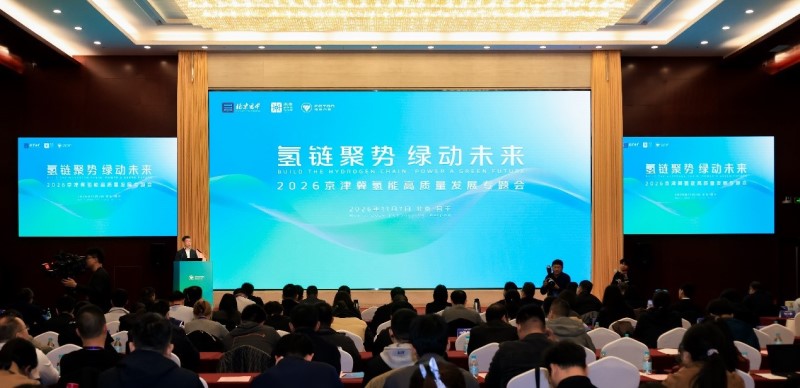
On November 7, the 2026 Beijing-Tianjin-Hebei (Jing-Jin-Ji) Special Session on High-Quality Hydrogen Energy Development, themed "Hydrogen Chain, Green Future," was held at the Petroleum Science and Technology Exchange Center in Changping, Beijing. As one of the core thematic forums of the 2026 Energy Transition Conference, the event received strong support from the Beijing Municipal Bureau of Economy and Information Technology and the Changping District People's Government, and was organized by Foton Motors with the Zhongguancun Hydrogen Energy and Fuel Cell Technology Innovation Industry Alliance as co-organizer.
The session coincided with two key milestones: the full launch of the Jing-Jin-Ji national comprehensive hydrogen application pilot and the implementation of Beijing's new medium- and long-term plan for the hydrogen industry. Representatives from government authorities, research institutes, industry bodies and upstream and downstream value-chain companies gathered for in-depth discussion of policy direction, technological progress, standards systems and real-world applications, pooling expertise for the high-quality development of hydrogen energy in the capital.
2026 Energy Transition Conference · Jing-Jin-Ji Special Session on High-Quality Hydrogen Energy Development
Broad Consensus Sets the Direction of Industry Development
At the session, Lu Zhenghua, Secretary of the Party Committee and General Manager of Foton Motors, said in his address that hydrogen energy is now moving from a stage of technology accumulation into a critical stage of scaled application. The national 15th Five-Year Plan has made forward-looking arrangements for future industries, and five national comprehensive hydrogen application pilot city clusters have been launched one after another, injecting strong policy momentum into industry development. As one of the earliest domestic companies to work on hydrogen commercial vehicles, Foton began its R&D in 2006 and, after nearly two decades of technical accumulation, has deployed more than 3,600 fuel-cell vehicles with cumulative safe operating mileage exceeding 220 million kilometres, covering urban distribution, regional logistics and long-haul trunk transportation. The company坚持 follows a "three-track" technology strategy of battery electric, hybrid and fuel cell, and has built an independent full-chain layout spanning complete vehicles, fuel-cell systems and core components. Looking ahead, Foton will seize the opportunity of the Jing-Jin-Ji pilot and work with value-chain partners to tackle the core bottlenecks of efficiency, cost and service life, moving hydrogen commercial vehicles from demonstration projects to large-scale commercial operation.
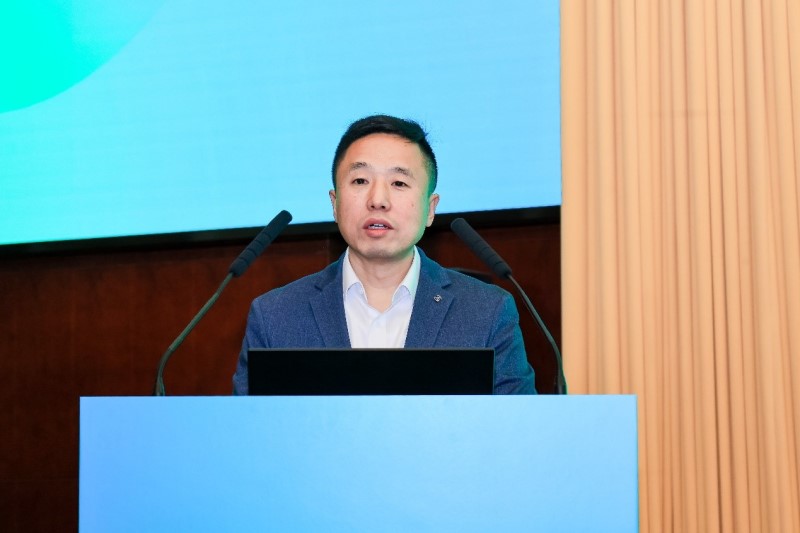
Lu Zhenghua, Secretary of the Party Committee and General Manager of Foton Motors, delivers remarks
Su Guobin, Deputy Director of the Beijing Municipal Bureau of Economy and Information Technology, noted in his address that hydrogen energy is one of the six future industries identified in the national 15th Five-Year Plan and is accelerating toward large-scale commercial use. On October 30, Beijing issued a new hydrogen implementation plan that shifts the industry from "policy-driven transfusion" to "market-generated self-sufficiency." The earlier Jing-Jin-Ji fuel-cell demonstration programme achieved outstanding results, he said, and during the 15th Five-Year Plan period Beijing will rely on the demonstration city cluster to build a hydrogen refuelling road network and expand application scenarios, creating a model of the full hydrogen value chain across Beijing-Tianjin-Hebei. He credited Foton Motors for its contribution as a pioneer and "chain leader" of the Jing-Jin-Ji hydrogen industry, and called on all parties to work together to improve the capital's hydrogen industry ecosystem.
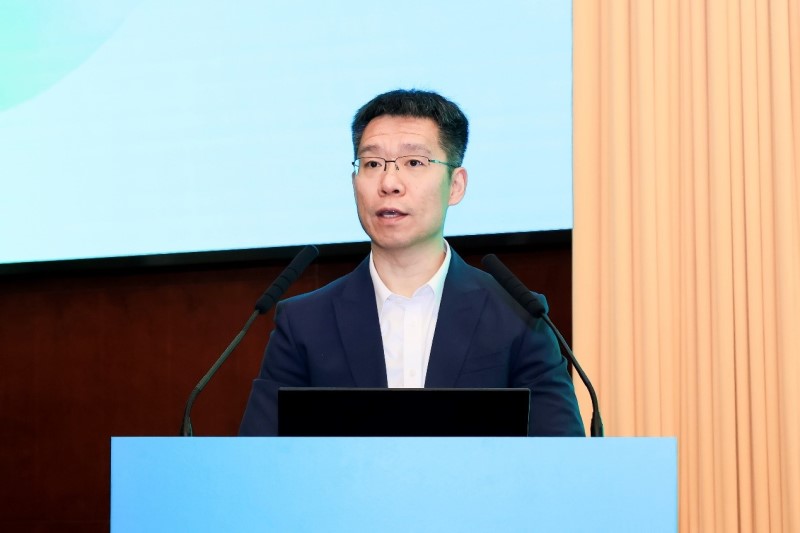
Su Guobin, Deputy Director of the Beijing Municipal Bureau of Economy and Information Technology, delivers remarks
Liu Weihua, Member of the Standing Committee of the Changping District Party Committee, Member of the District Government Party Group and Executive Vice District Chief, said that as the core carrier of the capital's hydrogen industry and a hub of Jing-Jin-Ji collaborative innovation, Changping relies on the science and innovation strengths of the "Energy Valley" in the Future Science City, bringing together industry, academia and research entities. Four achievements — including one by Foton Motors — have been selected for national-level demonstration, forming a complete ecosystem of "innovation sourcing plus industrial clustering." Changping is now focusing on three tracks — fuel-cell complete vehicles and core components, new electrolytic hydrogen production equipment, and green hydrogen fuels for energy applications — to build a hydrogen innovation and integration demonstration zone, and will continue to refine policy, open up application scenarios and improve the business environment as it joins the broader Jing-Jin-Ji hydrogen agenda and helps make the Energy Valley a flagship "dual carbon" showcase.
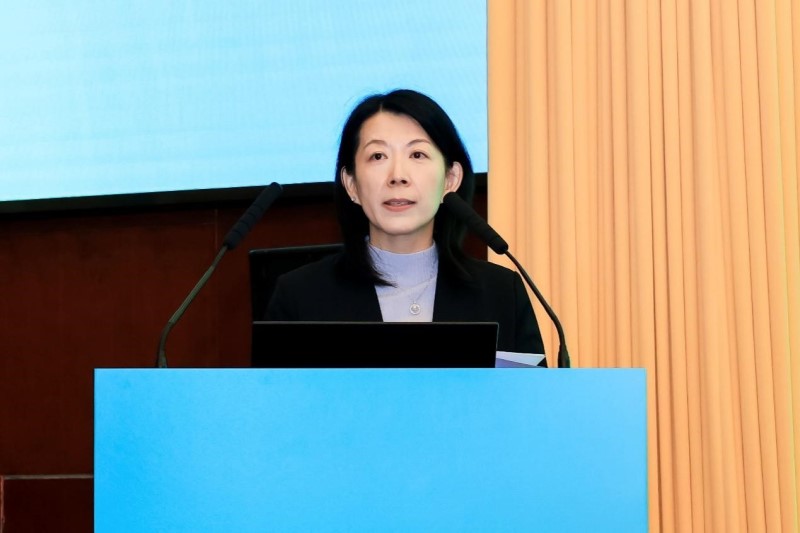
Liu Weihua, Executive Vice District Chief of Changping District, delivers remarks
In-Depth Discussion: Frontier Insights Across the Full Value Chain
The session was structured around two core segments — keynote presentations and a roundtable forum — creating a professional platform for in-depth exchange among government, industry, academia, research and end users, and responding comprehensively to the industry's most pressing questions.
In the keynote segment, seven experts from authoritative institutions, leading universities and major enterprises took the stage in turn, presenting on seven themes: policy interpretation, industry trends, technological breakthroughs, standards and norms, storage and transportation practice, clean hydrogen technology, and vehicle application, giving attendees a full view of frontier developments and practical pathways across the hydrogen value chain.
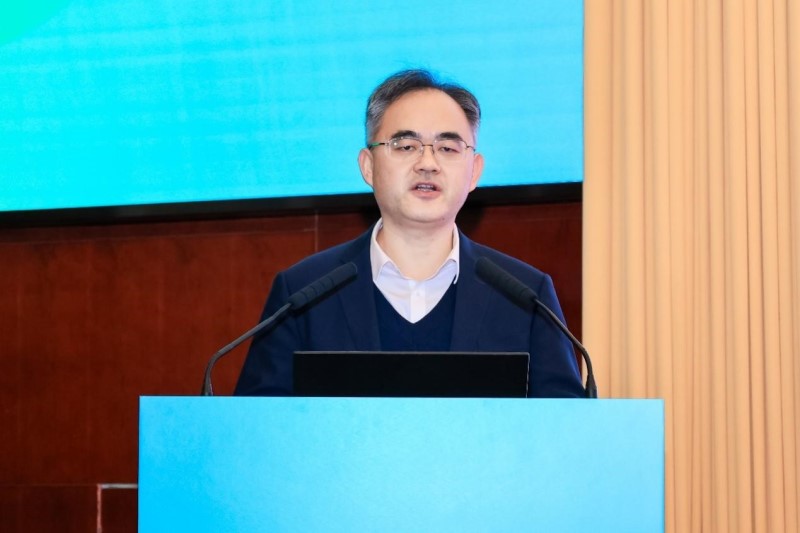
Fang Haifeng, Chief Expert at China Automotive Technology and Research Center Co., Ltd., presents "Interpretation of and Recommendations for the Comprehensive Hydrogen Application Pilot"

Lu Chenyu, Secretary-General of the Zhongguancun Hydrogen Energy and Fuel Cell Technology Innovation Industry Alliance, presents "Current Status and Development Trends of the Hydrogen and Fuel Cell Industry"
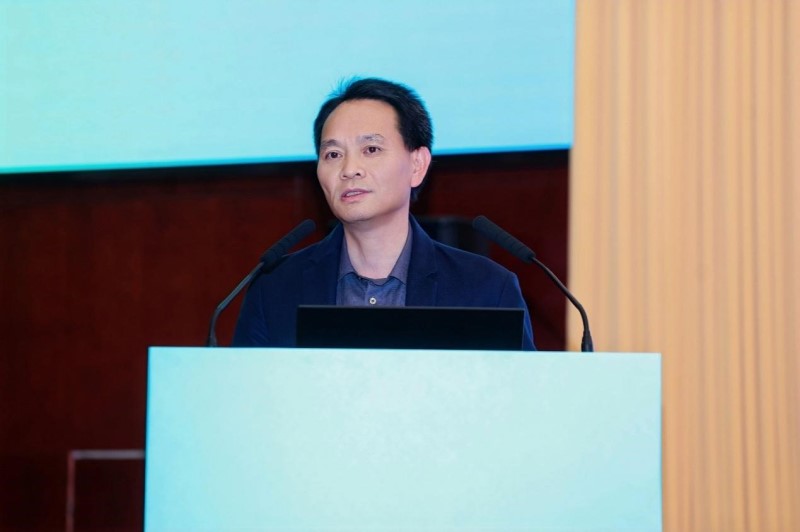
Professor Li Jianqiu of the School of Vehicle and Mobility, Tsinghua University, presents "Development of Hydrogen Energy and Fuel Cell Technology"
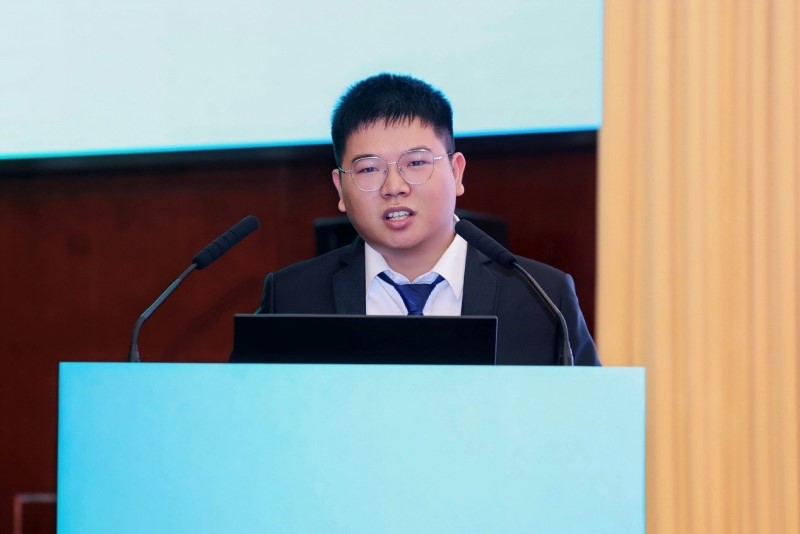
Su Zhiyang, Senior Engineer at the China Automotive Standardization Research Institute, presents "Current Status and Future Planning of International and Domestic Standards for Fuel-Cell Electric Vehicles"
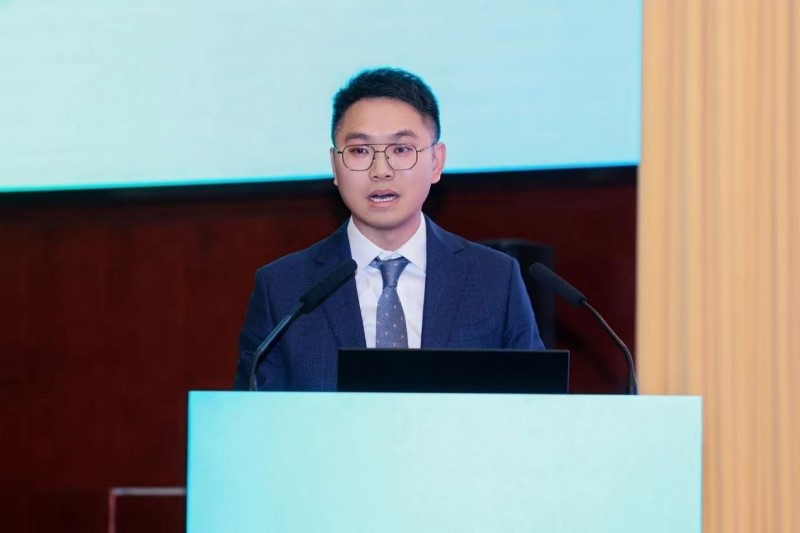
Huang Jianqin, Senior Engineer at Beijing Gas Group Co., Ltd., presents "Beijing Gas's Exploration and Practice in Regional Hydrogen Supply"
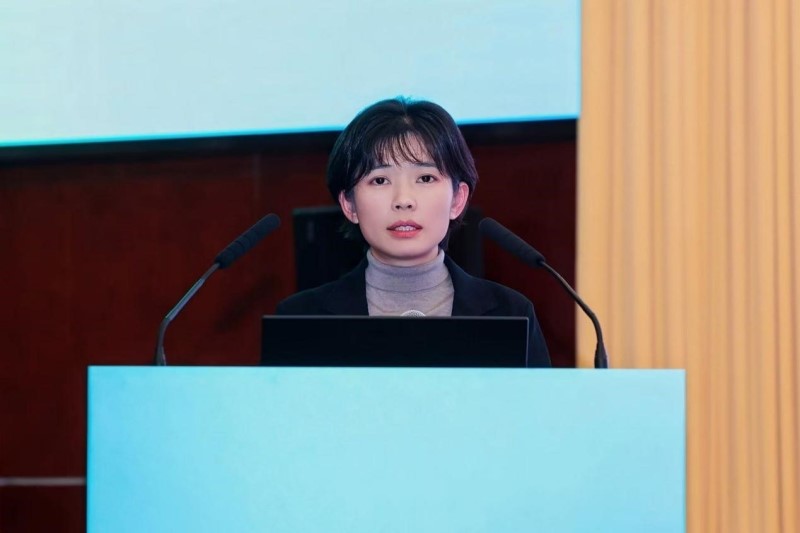
Chen Ying, Director at State Power Investment Corporation Hydrogen Technology Development Co., Ltd., presents "SPIC Hydrogen Technology's Hydrogen Practice"
Liu Yongliang, Fuel Cell Technology Director at Foton Motors, pointed out that Foton has consistently treated hydrogen as a key technology route within its new-energy portfolio. Since launching hydrogen fuel technology and product R&D in 2006, the company has achieved multiple industry firsts and built a supply-chain system covering the entire hydrogen fuel value chain. During the 15th Five-Year Plan period, Foton plans a nationwide rollout of 7,000 hydrogen commercial vehicles. He also shared Foton's R&D practice in liquid-hydrogen heavy trucks: the latest-generation product is equipped with a 300 kW fuel-cell engine, achieves a combined-cycle driving range of more than 1,000 kilometres, cuts hydrogen consumption to below 7 kg per 100 kilometres, lowers the drag coefficient to 0.28 and reduces vehicle weight by 30%. Foton has so far led the drafting of nine liquid-hydrogen commercial vehicle standards and is exploring demonstration operations around Xuyang Hydrogen's neighbouring scenarios and highway steel transport for Shougang Group.

Liu Yongliang, Fuel Cell Technology Director at Foton Motors, presents "Technical Progress and Industry Prospects of Liquid-Hydrogen Heavy Trucks"
After the keynote segment, Qin Zhidong, Deputy General Manager of Foton Motors, moderated a roundtable forum themed "Hydrogen Chain Future — Collaborative Innovation Across the Hydrogen Value Chain." Four guests from industry associations, research institutes and universities exchanged views across four dimensions: scenario-driven deployment and positioning; technological breakthroughs and a self-reliant value chain; storage and transport foundations reinforced by standards; and the integration of electricity and hydrogen to extend synergy. They shared practical experience and explored solutions to common challenges of economics, safety and coordination on the path to industrial scale-up.
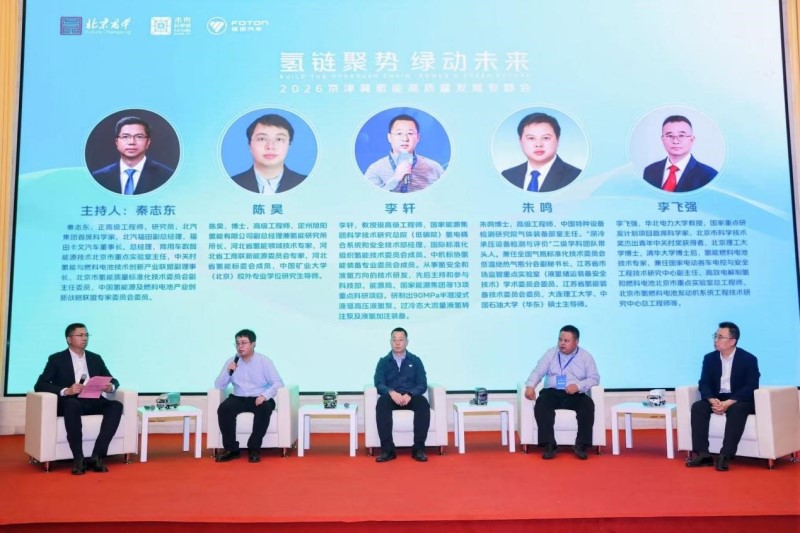
Qin Zhidong, Deputy General Manager of Foton Motors, moderates the roundtable forum
Chain Synergy and Focused Efforts: A Full-Chain Layout Accelerates Industrial Advancement
Hydrogen energy is a core pillar for building a new energy system and delivering on China's "dual carbon" goals, and hydrogen heavy trucks are a key route to zero-carbon transformation in medium- and heavy-duty long-haul freight. As one of the earliest domestic commercial vehicle manufacturers to enter the hydrogen field, Foton Motors has been working in the sector since 2006 and, after nearly two decades of accumulation, has grown into a national leader in hydrogen fuel-cell commercial vehicles and the core "chain leader" of Beijing's hydrogen value chain.
The Cavan Xinghai liquid-hydrogen heavy truck displayed at the event is a landmark result of Foton's industrialization of liquid-hydrogen technology. Developed from scratch on a forward, platform-based architecture, it covers multiple energy forms — battery electric, gaseous hydrogen and liquid hydrogen — and is equipped with a 300 kW fuel-cell system and a high-capacity 80 kg hydrogen storage system, delivering a real-world driving range of more than 1,000 kilometres and precisely matching long-haul highway logistics scenarios.
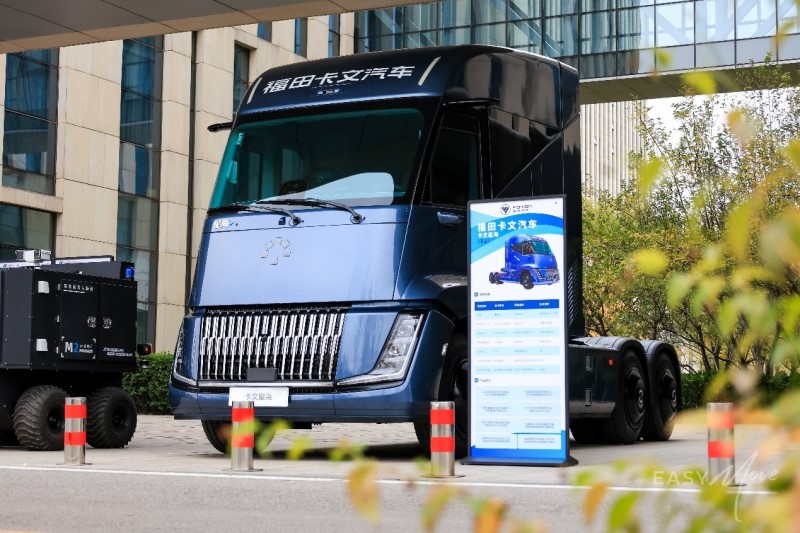
The Foton Motors Cavan Xinghai liquid-hydrogen heavy truck
Foton坚持 maintains its "three-track" strategy of battery electric, hybrid and fuel cell, and has built an independent full-chain layout in hydrogen — complete vehicles plus fuel-cell systems plus core components. On the vehicle side, it has achieved breakthroughs in liquid-hydrogen vehicle application, high-power fuel-cell matching, high-efficiency electric drive control and comprehensive use of cooling and thermal energy. On the system and component side, it is working on high-power fuel-cell integration, thermal management, and high-safety, high-density gaseous and liquid hydrogen storage and supply, while steadily advancing the domestic substitution of key parts such as stacks, membrane electrodes, bipolar plates and catalysts.
Building on this deep technical foundation, Foton is coordinating with ecosystem partners to improve the full chain of hydrogen production, storage, transport, refuelling and application. Today its hydrogen products cover major-event mobility support, urban distribution, regional logistics, trunk-line transport and public transit, firmly placing the company in the industry's first tier. From the 2008 Beijing Olympic Games to the 2022 Beijing Winter Olympics, Foton's hydrogen vehicles have provided service support for major international events, powerfully advancing hydrogen commercial vehicles from demonstration operation toward scaled commercial application.
With the Jing-Jin-Ji national comprehensive hydrogen application pilot now fully launched and Beijing's 2026–2030 hydrogen industry implementation plan officially in place, the sector has entered a window of scaled growth. Foton is seizing this dual policy-and-market opportunity, using frontier products such as its liquid-hydrogen heavy truck as the core lever, deeply integrating into the "six main corridors plus eleven branch lines" hydrogen highway network, deepening collaborative innovation with upstream and downstream partners, jointly tackling common bottlenecks of efficiency, cost and service life, and vigorously expanding core application scenarios in trunk-line heavy trucks and green logistics — contributing Foton's strength to China's green and low-carbon energy transition.